A salesperson can be excellent at one SaaS company and struggle at another. I've seen it happen. I've also made the mistake of getting excited about a candidate's previous results without digging deeply enough into how they achieved them. Someone has a recognizable company on their resume. They finished at 130% of quota. They were first on their team. That's worth paying attention to, but it doesn't answer the question that matters most.
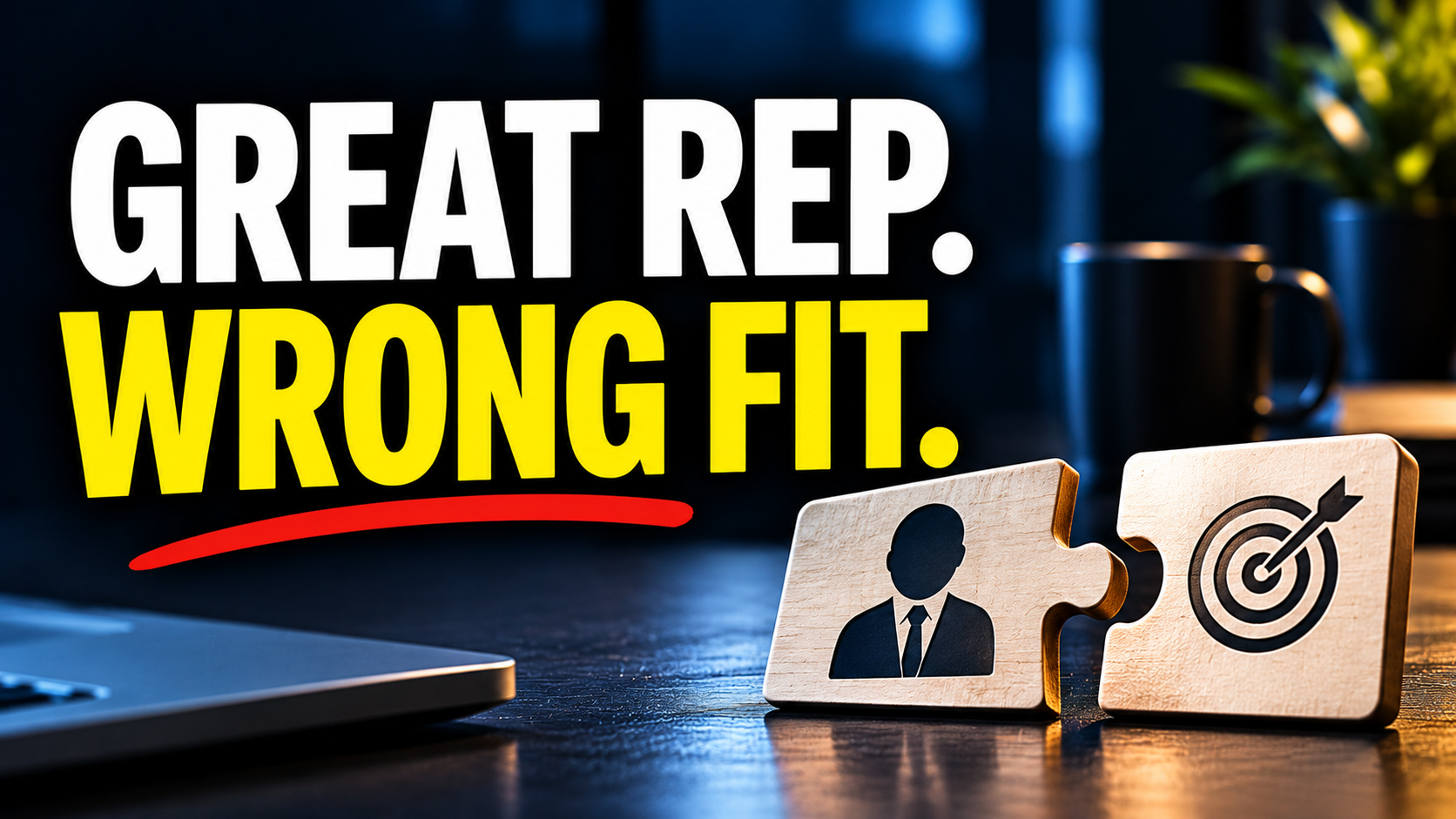
Not the company they came from. Yours. And the difference between those two environments can be enormous.
When you're hiring salespeople, particularly your first or second sales hire, you need to understand whether you're looking for an Architect or an Operator.
An Architect can build the playbook. They're comfortable when everything isn't figured out. They can create processes, test approaches, work without a lot of resources, and figure out what needs to happen next.
An Operator is different. An Operator is excellent at taking something that's already working and executing it consistently. Give them a proven playbook, the right opportunities, the right support, and they can produce outstanding results.
Neither is inherently better. They're different hires for different environments. The problem comes when a founder needs someone to build a sales system but hires someone whose entire career has been spent operating inside one. That salesperson may be very good at their previous job. They just haven't been hired to do that job anymore.
Think about a salesperson coming from a large, successful SaaS company. They might have an SDR booking qualified meetings. A sales engineer might help with technical demonstrations. They might have sales enablement, established messaging, a mature CRM process, and a manager who coaches them every week. And they might be selling a product that prospects already know.
That's a very different environment from a $2 million SaaS company where almost nobody recognizes the brand. In the smaller company, the salesperson may need to build prospect lists, generate their own opportunities, run discovery, deliver demos, handle technical questions, negotiate, close, and figure out what to do when something isn't working. The work is different.
I learned this myself when I joined my first startup. Right after training, I asked my VP of Sales who could build me a couple of training decks. She laughed so hard she had tears running down her face. She wanted to know how I'd missed this during onboarding.
I was used to working in an environment where there was someone responsible for those things. At a startup, I needed to become that person.
At a big company, they have a person who does the thing. At a small company, you are the person who does the thing.
It's an adjustment, even for experienced people.
When someone tells me they were a top performer, I want to understand what their job really looked like. I want to know what their Tuesday looked like. Where did their meetings come from? Who built their prospect lists? Who ran discovery and demonstrations? Who handled technical questions? Who created proposals and negotiated deals? What did their manager do for them? And what happened when they didn't have enough pipeline?
These questions help you understand what the candidate personally contributed and what the company provided around them. I also want to understand the economics and sales motion. What was their average deal size? How long did deals take to close? Were they selling to small businesses, mid-market customers, or large enterprises? Were their opportunities primarily inbound, or did they create their own pipeline? Who was the buyer?
A candidate who has spent years selling six-figure enterprise contracts may have developed excellent skills. But that doesn't automatically mean they're prepared to sell dozens of smaller contracts every quarter. Here's a real example of what that difference can look like.
A founder in one of my masterminds had three SMB sales reps. They were selling smaller, transactional SaaS deals, and he wanted to add a strong salesperson to the team. He met an enterprise Account Executive at a trade show.
The candidate had closed more than $2 million in each of the previous two years. That's a resume I'd want to look at. But let's compare the actual jobs.
The founder's company had an average deal size of approximately $4,000 in annual recurring revenue. The reps were responsible for creating their own opportunities through outbound prospecting. They were closing around $400,000 in new ARR annually. At $4,000 per deal, that's roughly 100 sales a year, or a little more than eight every month.
The enterprise candidate had a very different background. His average deal size was around $150,000. Most of his opportunities came from inbound leads and an SDR who put meetings on his calendar. His sales cycles were approximately nine to twelve months. He was used to working fewer, much larger opportunities.
Compare those environments:
Existing SMB reps
Enterprise candidate
Average deal size
$4,000 ARR
$150,000
Opportunity generation
Self-generated outbound
Mostly inbound / SDR-supported
Sales cycle
2–3 weeks
9–12 months
Annual deal volume
About 100
Fewer than 14
Sales motion
High-volume, transactional
Lower-volume, complex
Both jobs require sales ability, but they require different habits, activity levels, and approaches to managing a pipeline. The SMB salesperson needs to wake up, create enough activity, close smaller opportunities quickly, and start over again. The enterprise salesperson is used to managing a smaller number of larger, more complex opportunities over many months.
The founder hired the enterprise AE. Two months later, he was fourth on the team. He had closed $28,000. Then he quit.
Not necessarily. He had demonstrated that he could sell in an enterprise environment. But that experience didn't prepare him particularly well for the job he was hired to do.
The issue wasn't simply whether he had sales talent. It was whether his previous experience gave him a good chance of succeeding in this specific environment. That's a very different hiring question.
And it's why I don't automatically get excited when someone tells me they worked at Salesforce, HubSpot, or another well-known SaaS company. Those can be excellent places to learn. But the logo doesn't tell me whether the candidate built their own pipeline, developed a sales process, or worked without the resources that helped make them successful. You need to find out.
You're probably not going to find someone whose previous company looks exactly like yours. The same product, same customer, same deal size, same sales cycle, same company stage, and same resources? That would be ideal, but it isn't always realistic.
So you need to decide which differences matter most. For an early-stage SaaS company, I would pay particularly close attention to the sales motion.
If your team generates nearly all its opportunities through outbound prospecting, a candidate who has only handled inbound meetings deserves additional scrutiny. If you're selling $5,000 contracts with short sales cycles, someone whose entire career has been built around $300,000 enterprise deals may have a difficult adjustment.
If you need someone to build a process, find out what they've actually built. Don't just ask whether they're comfortable working in a startup. Ask for examples. What did they inherit? What did they change? What did they personally create? What worked, what didn't, and what happened as a result?
You can often teach someone your product, market, and customer terminology. Changing the way they've learned to sell can be much harder. That doesn't mean candidates can't make those transitions. It means you should understand the transition you're asking them to make.
Before Angie and I start looking for candidates, we spend time understanding the company they're going to join. What is already working? What isn't? Where do opportunities come from? What resources will the salesperson have? What does the founder still own? What must the new hire build, change, or execute? And what does successful performance actually look like?
Those answers determine the kind of salesperson we should be looking for. Without them, it's easy to get distracted by a recognizable employer, a great title, or an impressive attainment percentage. None of those details is meaningless. They're just not enough.
You're not looking for the best salesperson on paper. You're looking for the salesperson whose experience gives them the best chance of succeeding in your business.
That distinction can save you a very expensive hiring mistake.
By Travis Janko, CEO of GSD Coach & Recruiting
GSD Coach & Recruiting helps SaaS companies identify and hire A-player sales talent with the right experience for their sales environment. Talk With GSD

Get more expert advice for SaaS founders on sales hiring, recruiting strategies, team leadership, and building high-performing sales teams.

Get started today with a free, no-obligation discovery call. Just fill out the form and share your revenue goals. We’ll be in touch within 24 business hours to show you how our proven systems can accelerate your hiring process.



Our proven methodology has helped SaaS companies across every growth stage build revenue teams that drive predictable, scalable results. Connect with us to discover how we can accelerate your hiring process and deliver the A-Player talent your company needs to reach its next milestone.